
WHEELING, W.Va. —Abbey Yung is a successful beauty tip influencer on TikTok. Since she posted her first video in 2020, she has since amassed over 2.2 million followers and 68.6 million likes.
A quick stroll down her social media page will show her testing and reviewing hundreds of beauty products, and giving her tips on the best ones and ways to use them. With flawless hair and skin, her tips seem overwhelmingly credible.
Over the years, she has been building a regimen of hair care products and a specific method to use them. In July of 2025, she finally created a slideshow infographic for it: “The Abbey Yung Method.”
The post has reached over 4.5 million views and 455 thousand saves and shares, which for social media is an impressive view-to-engagement ratio. The statistics make it clear that hundreds of thousands of people are captivated by her method and are interested in implementing her tips themselves.
I decided for four weeks I would try it myself to share whether this “tress test” is a win or a waste.
So, what is the “Abbey Yung Method?” It’s is a protein-heavy bond repair routine for damaged hair. Nearly every product recommended is aimed to focus on repairing hair bonds and strengthening damaged hair.
It is important first to understand the basic makeup of our hair strands. Hair is made of the same material as our fingernails: keratin, and more specifically, keratin protein fibers. These fibers are arranged in long chains that give our hair both strength and elasticity.
For damaged hair lacking enough protein to remain strong (specifically hair with bleach or heat damage), this method will be good to help restore the lack of protein needed to strengthen the strands.
The method, if followed as recommended, uses at a minimum 7 different products, and uses 15-17 products in its full application. There is an element of customization within her method that allows inclusion or subtraction for individual needs, such as dandruff shampoos.
For my application, I used 12 of the products she recommended to be as thorough as possible in a way that made sense for me. These are the products I will focus on the most. These are the products I used and how I used them:
Pre Shower:
-OGX Weightless Coconut Oil Mist is applied to hair at least 20 minutes before showering to protect the hair from being overly stripped when washing.
Shampoo:
-Loréal Ever Pure Clarifying Shampoo is used once or twice a week as the first shampoo to remove product and grime buildup from the hair and scalp to allow the following products to
penetrate more deeply.
-Dove Bond Strength Shampoo or Garnier Fructis Hair Filler Strength Shampoo are used next. Use only one or the other.
Bond Repair:
– Loréal Ever Pure Bond Repair Concentrate is used 2-3 times per week before conditioning and left to sit for 5 minutes before rinsing.
Conditioning (use any 2 of the 3 products in any combination):
– Loréal Ever Pure Glossing 5-Min Lamination Mask is left to sit for 5-10 minutes before rinsing.
– Dove Bond Strength Conditioner or Garnier Fructis Hair Filler Strength Conditioner, use only one or the other.
-Dove Bond Strength 10-in-1 Serum Mask left to sit for 5-10 minutes before rinsing.
Post Shower:
-OGX Bond Protein Repair Heat Protectant Spray applied to damp hair before drying or heat styling.
-Pantene Miracle Rescue 3-in-1 Multitasking Leave-In or Rinse-Out Conditioner applied to damp hair before drying or heat styling.
-Dove Bond Shield 10-in-1 Serum applied to hair after drying to moisturize and protect ends.
Throughout the process of trying this method, my biggest takeaway is the time commitment needed to follow this routine. In total, it took me well over an hour and a half to wash and dry my hair according to her routine. For me, this was not worth it. I would
recommend trying some of these products and implementing them in ways that make sense for your schedule, budget, and hair.
Abbie Davis, Wheeling hairstylist at Destiny Salon, says, “Everyone is different. For her to say this is a foolproof method that works for everyone isn’t something I personally agree with. You can take her method and recommendation into consideration, and use those products to find what works for you through trial and error.”
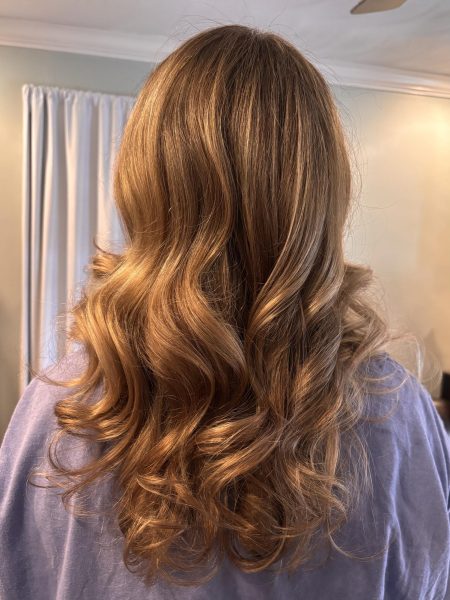
There were a few products of the lineup that stood out to me in both positive and negative ways.
Worth it:
-The OGX Weightless Coconut Oil Mist was a good addition to my hair routine, more specifically the practice of oiling hair before washing, and was backed up by Davis, who said, “the method of applying oils before washing is smart, and I personally do it. I
always have oil on my hair, as a professional hairdresser, I think it’s important. When people tell me my hair is so shiny, I tell them it’s because I have oil on.”
– The Loréal Ever Pure Clarifying Shampoo is a solid and affordable clarifying shampoo.
-The Dove Bond Strength line was amazing in all aspects. The shampoo, conditioner, mask, and serum all made noticeable differences in my hair and are affordably priced.
Skip Buying:
– The Garnier Fructis Hair Filler Strength Shampoo and Conditioner. My hair felt noticeably worse on days that I used these products, and they are more expensive than the Dove line.
– The Pantene Miracle Rescue 3-in-1 Multitasking Leave-In or Rinse-Out Conditioner made my hair feel sticky and weighed down, and provided no noticeable moisture.
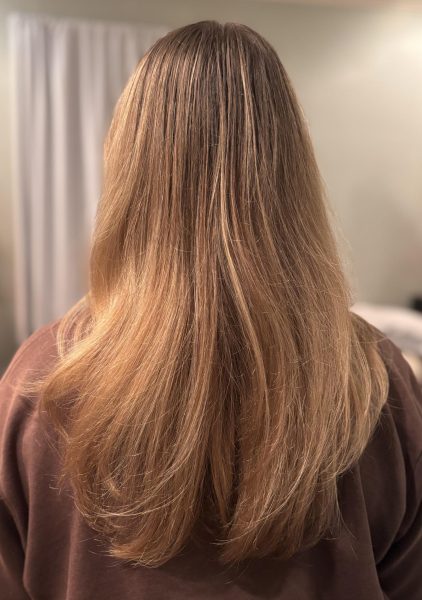
Overall, I felt that this routine did not make a drastic difference in the health of my hair and, in some ways, impacted it negatively. My hair began to feel drier and stiffer, which could be attributed to a number of things, such as user error. However, the reason that I suspect is that my hair didn’t need such a protein-heavy routine to begin with.
In order for our hair to remain healthy, we must maintain a balance of protein and moisture in our hair to retain both its strength
and its ability to move and flex without breaking. This is where the term “protein overload” becomes important.
Imagine a strand of hair like a pasta noodle. Ideally, it is best enjoyed when it is cooked perfectly, not mushy and overcooked, but not too hard or underdone. When we have damaged hair, our hair is like the overcooked pasta noodle that is too soft and stretches too much. On the flip side, if our hair has too much protein, it becomes like an uncooked pasta noodle, which is brittle and easy to snap.
The analogy is silly, but it conveys the well-known sentiment that too much of anything is a bad thing. Davis remarked on this, “your hair is soft. Protein strengthens it. If you put in too much, it would become brittle and lose its flexibility, so it’s important to balance it with moisturizing products… if you are doing this method and realize your hair isn’t feeling soft, that might be a. good test. If it’s stiff or no longer blow-drying smooth, I would start the process of elimination with products and supplement with moisturizing ones.”
Throughout my research, there are a few other things I have noted. As previously stated, Abbey Yung has been posting for over 5 years and has tried a battery of different products. While her recommendations for which products helped her get her hair where it is today are likely some of her favorites and are good products, it isn’t fair to claim that those products alone got her to where she is in her hair care journey today, especially considering many of those recommendations weren’t available until recent years.
A second note is that while I may not have had great results in 4 weeks, online commentary from many who have tried Abbey Yung’s
recommendations says that they didn’t start seeing drastic results until the 6-month mark. The concept behind a lot of what Yung promotes is good hair care practice and can provide benefits to your hair. However, I would not recommend jumping feet first into this viral trend because it is a high up-front cost, time commitment, and ultimately may not serve you or your needs well.
As with any internet trend, it is important to do your own research, consume influential media critically, and do things that serve you and who you are, not because someone with 2 million followers says you should.